
Eleanor Que
“When you give a dinner or a banquet, do not invite your friends or your brothers or your relatives or rich neighbours, lest they also invite you in return and you be repaid. But when you give a feast, invite the poor, the crippled, the lame, the blind, and you will be blessed, because they cannot repay you. For you will be repaid at the resurrection of the just.” – Luke 14:12-14
Many of us are fundamentally acquainted with the Christian value of hospitality: the reception of and care for guests, visitors and strangers. But what makes hospitality radical? Jesus’ telling of the Parable of the Great Banquet gives us some insight (Luke 14:12-14). He essentially advises his host to do the unexpected. Rather than yielding to the standard logic of reciprocity, the host is encouraged to generously serve and embrace all guests, regardless of their status and ability to return the favour.
Plainly, radical hospitality is a step up from simply entertaining guests; it warrants sacrifice and others-centredness. This however, also presents us with a challenge: are we willing to go the extra mile, even if it means losing out in the short run or potentially being taken advantage of? How can we, as a church, navigate such a culture with Christ being our model?
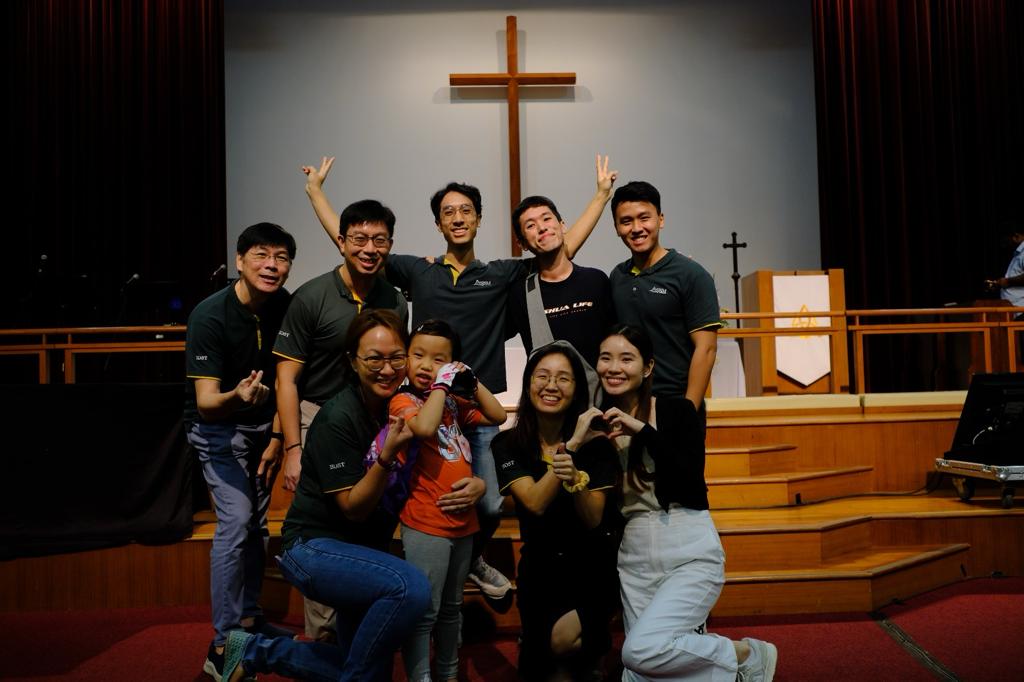
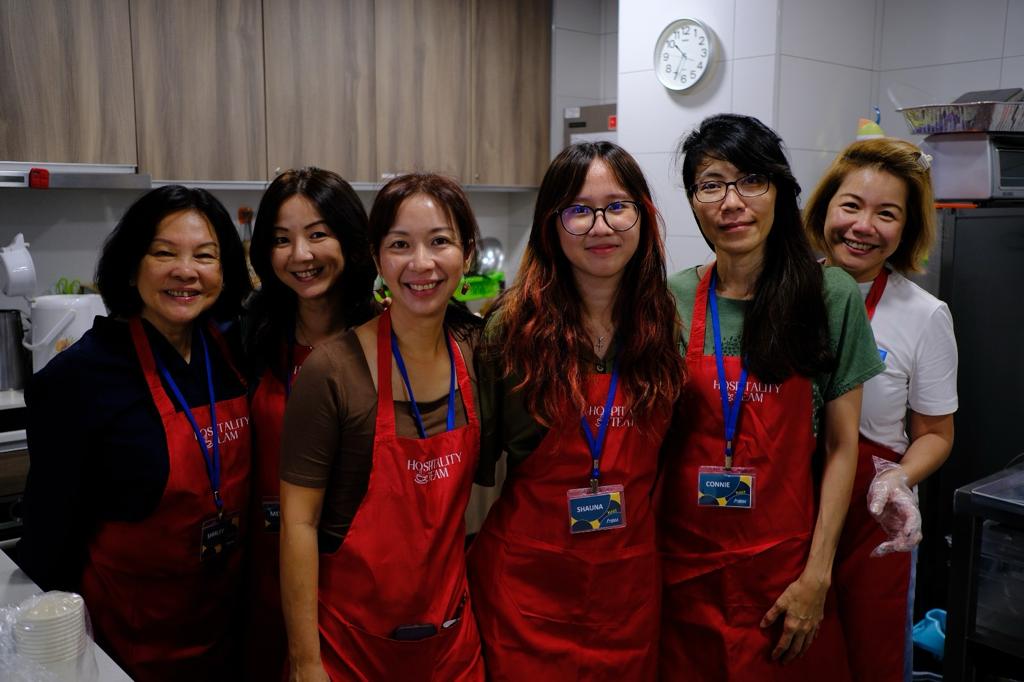
With the church seeking to intentionally foster radical hospitality this year, SOL deemed it apt to unpack the journey thus far with the principal steerers of this movement: SJSM’s Host Team.
Metamorphosis
The team recalled a time where the key “job scope” of ushers was to offer functional assistance at the main services (read: guiding people to the pews, handling offertory, communion crowd control). While there were dedicated teams tasked to usher newcomers to the welcome corner for coffee and chats, follow-up protocols were not well-established, leading to low retention rates.
Fast-forward a decade and the hospitality culture in SJSM has evolved drastically, alongside a starkly-transformed physical landscape.
“We are very much helped by the new facilities and infrastructure.”
With the additions to the SJSM Village finally complete, there were abundant opportunities to lean into our identity as a church without walls. The kitchen, community hall and nursing home all became fresh grounds for sowing and reaping. In particular, the ample space of the community hall allowed for intermingling of congregants post-services (i.e. SES dinners) and extended engagement of newcomers over refreshments. These conversations enabled the hospitality team to better attend to the needs of guests, be it plugging them into cell groups from the get-go or introducing them to various personnel in different ministries. Overall, the warm environment and genuine connections fostered came together to ensure a more seamless integration for newcomers.
Another fundamental change is that hosting is no longer solely a weekend affair. The SJSM village now receives daily visitors, many who are next-of-kin and/or caregivers for the nursing home residents. With the understanding that the caregiving journey can be a lonely and draining one, the hospitality team introduced the weekday Tea Terrace programme. Free snacks and beverages are catered for all, and most importantly, volunteer hosts are present to build rapport with this group of individuals. The leading aim is to provide a safe space where visitors can unload their burdens and confide in trusted, compassionate people who support their emotional and social needs.
Bearing Fruit
Ultimately, our concerted efforts to anticipate guests’ needs and extend extraordinary pastoral care are all part of reflecting God’s love into the lives of others. While not everyone may be immediately receptive to the gospel, seeds can be sown through these radical acts of kindness and hospitality.
Our endeavour to go above and beyond has not gone unnoticed, and has not been fruitless. The many encouraging encounters and transformed lives as a result are testament to this. A host team member recounted an experience where they invited a caregiver to the Sunday Mandarin service after getting to know her through Tea Terrace. She did not show up to the subsequent services as she lived far away and was unable to make the weekly commitment. Yet, she returned one day to thank the host for helping her and introducing her to Christ. She had become a regular attendee at a church near her house and was waiting to be baptised!
Heart-Work
Many have noticed how the church switched from using the title “usher” to “host” in recent years. Ps Kim Yien, our hospitality head, explained the intentional transition. “Usher” brings to mind a sterile, functional role, while “host” is more all-encompassing and captures the relational identity of being ambassadors for God. As she put it, hosts should be the catalysts for fostering a culture of welcome and warmth.
Granted, the hospitality ministry is a “low barriers to entry” ministry that anybody with a willing heart and a pair of helping hands can join. Yet, it goes without saying that hosting is not a job limited to the people wearing green shirts.
“The church is the house of God and as a family, we are all hosts!”
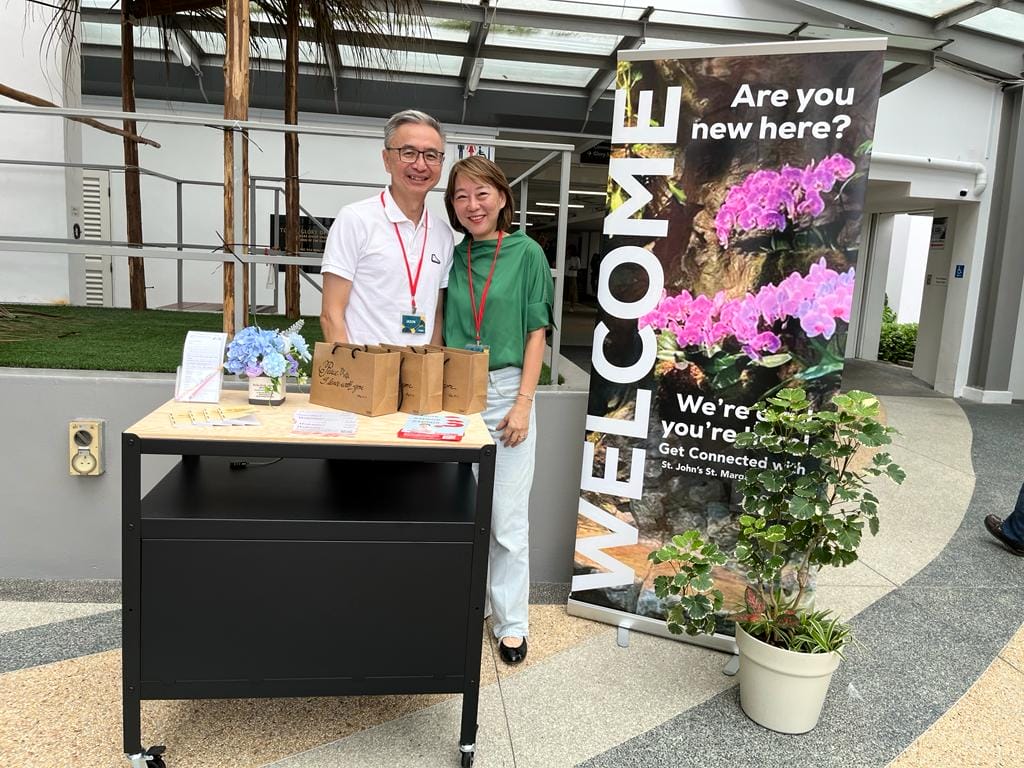
Even without becoming a “host” in its formal capacity, all SJSMers can play a part in radical hospitality culture-building. Hospitality is not solely oriented towards welcoming newcomers, but manifested in how we treat each other too. Do we acknowledge the familiar faces that we see at the concourse? Do we remain comfortable in our holy huddles, or do we intentionally approach someone we often notice sitting alone in the pews?
Inertia and the fear of rejection or awkwardness are our biggest obstacles. We may hear countless rousing sermons, but what good are they if the stirring in our hearts does not inspire us to move our hands and feet? It is natural to gravitate towards people like us, but radical hospitality demands that we bridge uncomfortable differences to receive everyone. At the root of it, we are all individuals equally valued and cherished by God. When we adopt that perspective and embrace the renewed transformation of our minds (Romans 12:2), it is easier to move beyond self-consciousness and shallow interactions.
To Bless and Be Blessed
“You give an inch and they’ll take a mile!” It is no secret that radical hospitality often comes at a cost. There have been instances where our Tea Terrace tables have been vandalised, as a result of it being left outside for anybody’s public use. The discouraging reality is that our generosity can be taken advantage of and abused. But rather than turning to cynicism, Matthew 5:39-41 reminds us:
“Do not resist the one who is evil. But if anyone slaps you on the right cheek, turn to him the other also. And if anyone would sue you and take your tunic, let him have your cloak as well. And if anyone forces you to go one mile, go with him two miles.”
At the end of the day, we are called to respond with grace; the extraordinary kind that intrigues and invites curiosity from outsiders. We act generously in faith, trusting that our treasures are laid up in heaven and that God does not shortchange those who build His kingdom.
With this anchoring mindset and motivation, we come full circle back to Christ, our role model. As we draw strength and provision from Him, may we be joyful hosts who offer our gifts and time as instruments for His glory.